
12% total solids
Conventional- Composición
- Açaí. Nothing else.
- Energía
- 60 kcal / 100 g
- Mejor aplicación
- Bowls, smoothies and beverage bases
A lighter body and a lower ingredient cost per kilo for high-volume applications.
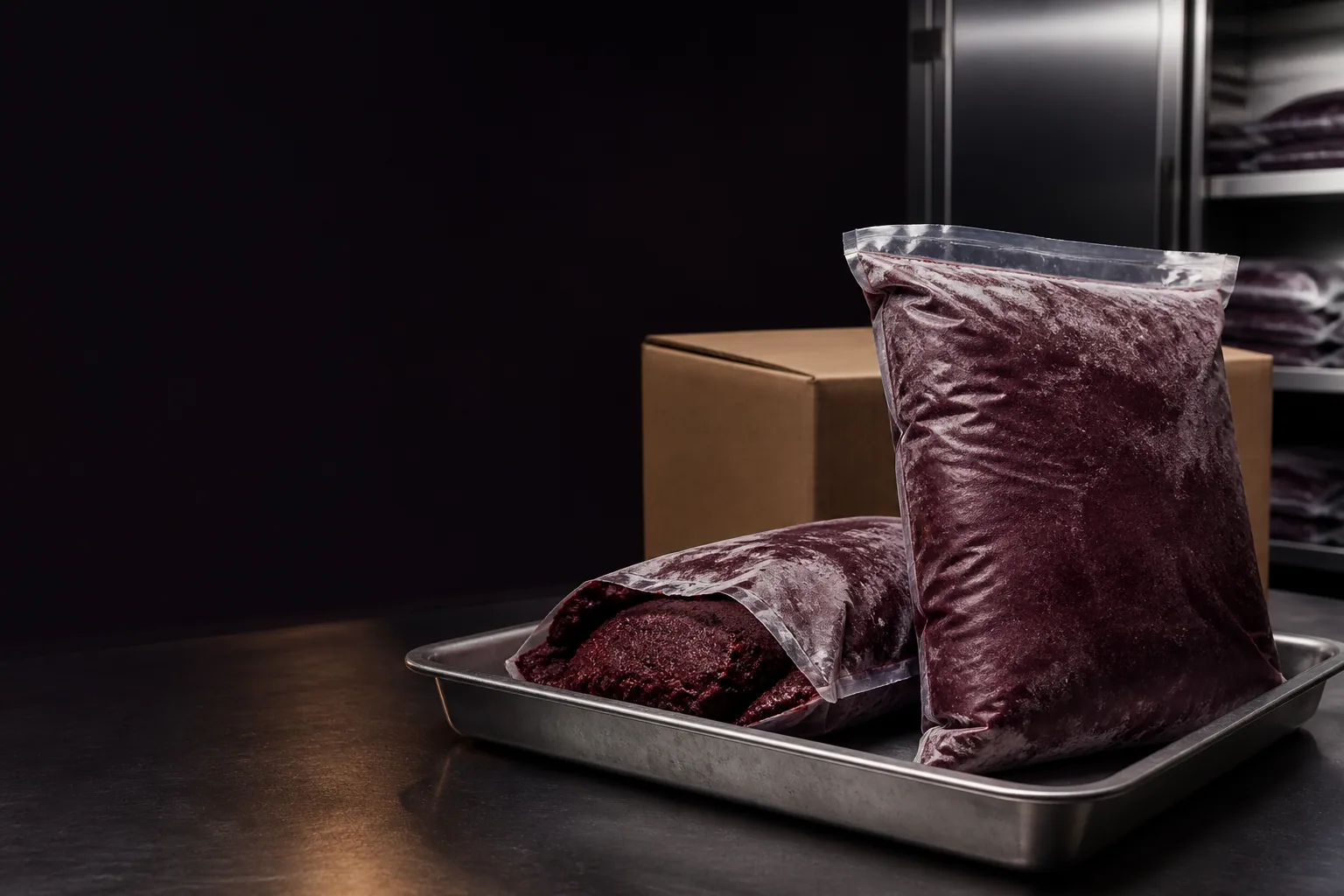
Unsweetened Brazilian açaí pulp in 12% and 14% total solids for sorbet, bowls, beverages and industrial formulation. Conventional or organic, supplied frozen from Brazil.
Choose the right base
Total solids determine how much açaí character survives dilution. Choose 12% for volume-efficient bowls and beverages; choose 14% when colour, fat and flavour need to carry through a formulated frozen dessert.
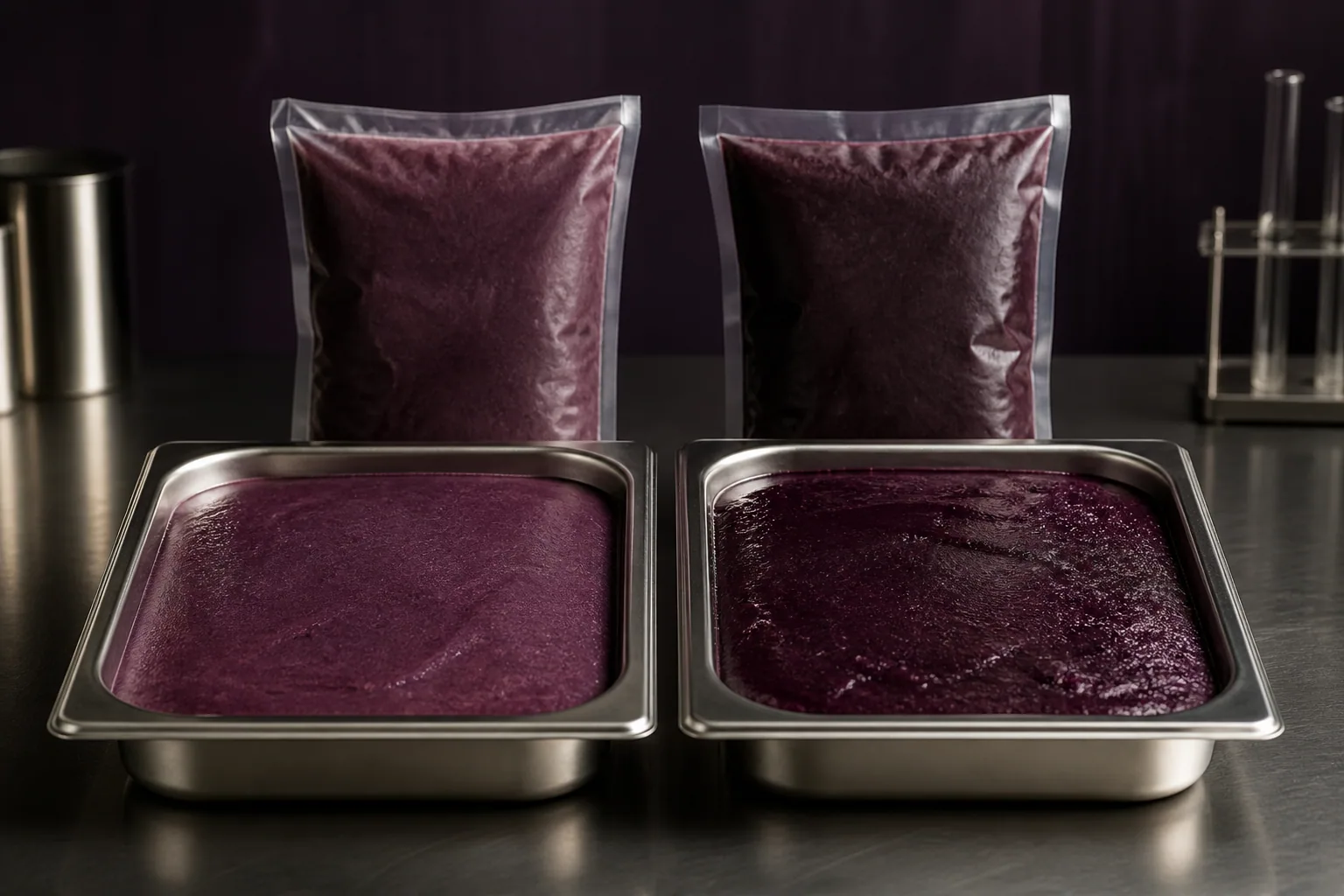
A lighter body and a lower ingredient cost per kilo for high-volume applications.
More colour, flavour and açaí character remain after sugar and water are added.
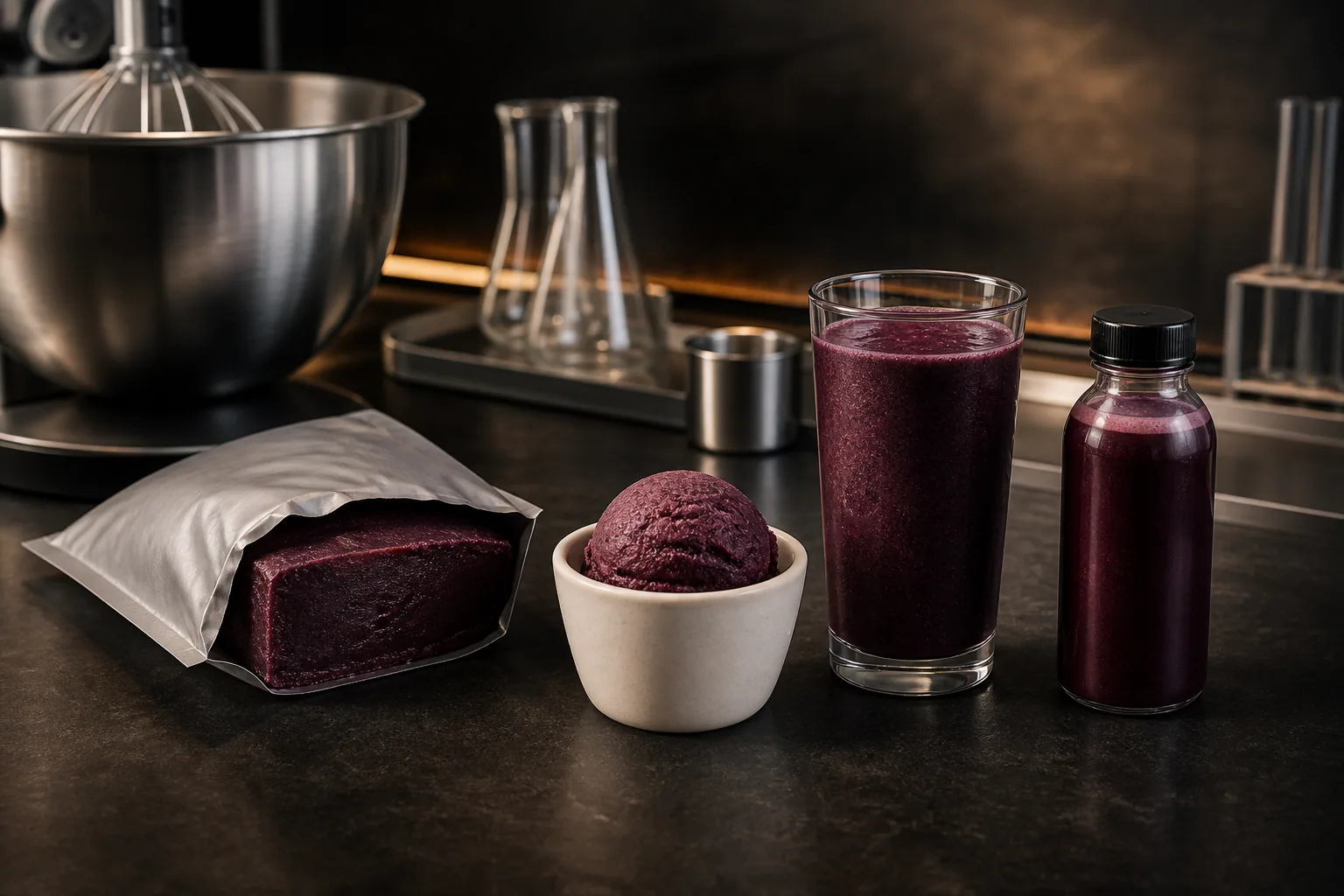
Built for formulation
No sugar, guaraná or stabiliser system is pre-decided. Your R&D team controls every variable in the finished product.
Start with 14%
A higher-solids base protects colour and flavour after the finished mix is formulated.
12% or 14%
Choose 12% for volume efficiency or 14% for a more intense premium menu position.
Usually 12%
A clean unsweetened base for beverages where your team controls sweetness and viscosity.
Formula-led choice
Your team specifies the sweetener, guaraná, stabiliser system, texture and serving profile.
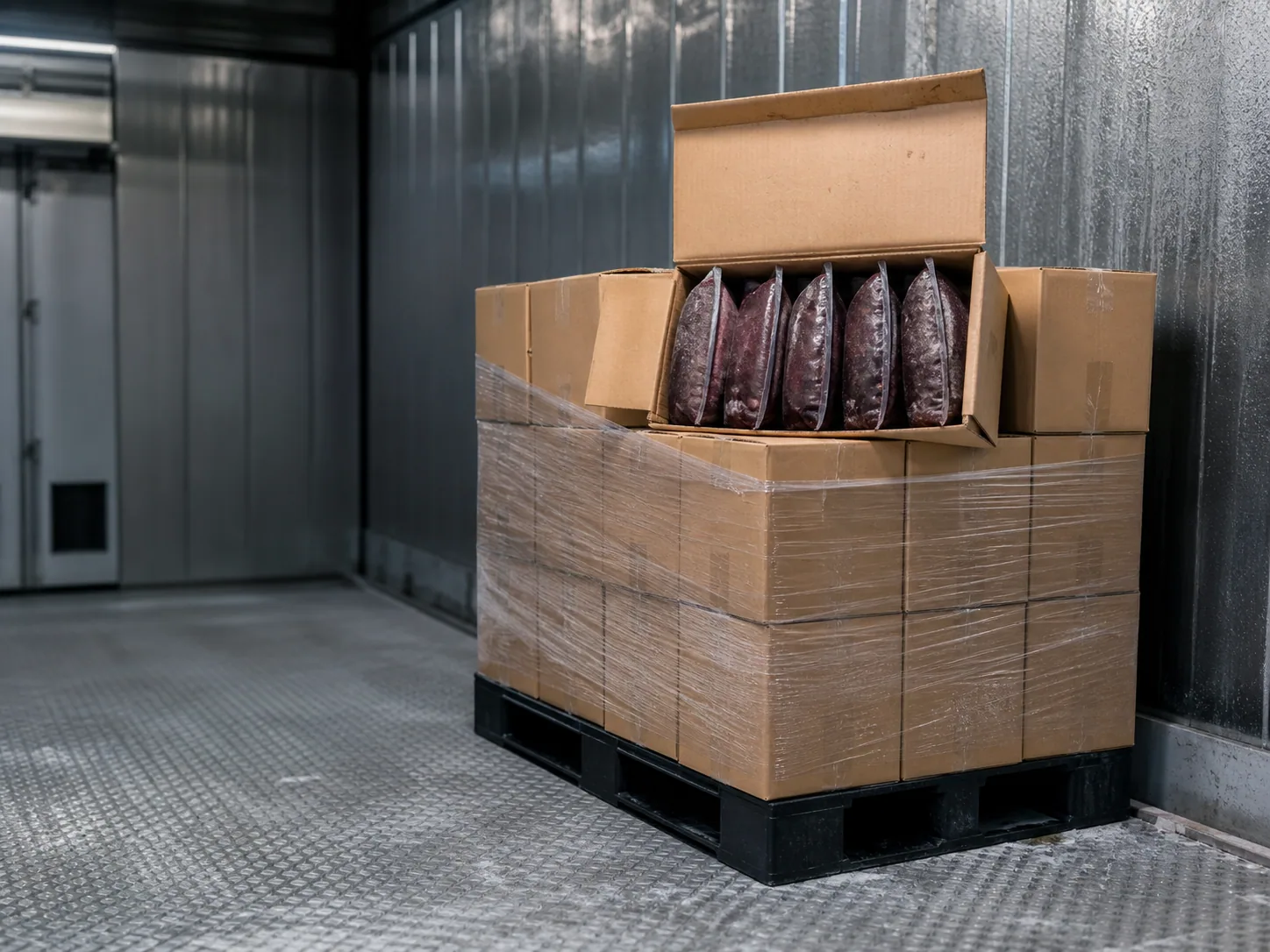
Standard export supply uses 1 kg frozen pouches packed for commercial handling. Alternative primary and tertiary formats are evaluated against volume and production feasibility.
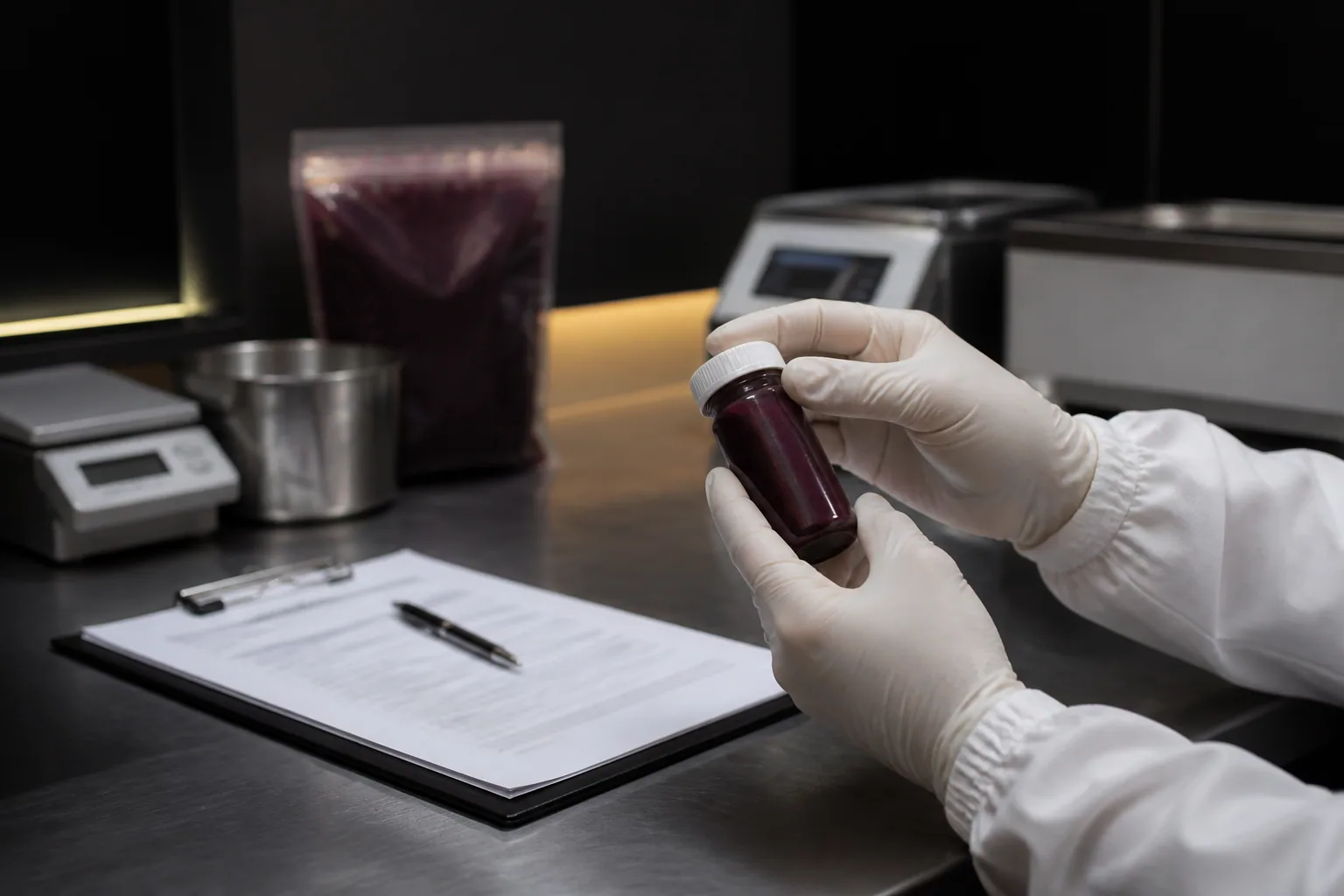
Technical sheet, nutritional and microbiological panels, COA where applicable, certificate of origin and destination-specific export documents.
Reference specification
| Total solids | ≥ 12.00% or ≥ 14.00% |
|---|---|
| pH | 4.00–6.20 |
| Total acidity | max. 3.20 g / 100 g |
| Total polyphenols | ≥ 1.80 g / 100 g |
| Anthocyanins | ≥ 0.44 g / 100 g |
| Colour · flavour | Violet purple · unsweetened, not sour |
| Particle size | ≤ 0.7 mm non-edible fraction |
| Microbiología | Salmonella absent in 25 g · E. coli absent |
| GMO · irradiation | Non-GMO · irradiation free |
| Allergens · gluten | None declared · gluten free |
Final values and documents are confirmed by grade, production lot and destination.
From validation to supply
Share the application, grade, destination and validation quantity.
Thermal packaging and dry ice support laboratory and bench trials.
Commercial supply starts at 1,000 kg FOB; ocean economics improve from roughly four tonnes.
No. The standard grades contain only açaí, or açaí and water. Your team controls the entire downstream formulation.
Yes. The 14% grade is available organic with certification for the Brazilian, US NOP and European EC markets.
Sample and pilot quantities travel by air with thermal packaging and dry ice. The freight structure is quoted for the destination.
The reference minimum is 1,000 kg FOB Brazil in standard 1 kg bags. Reefer economics improve as volume increases.
Technical data sheet, nutritional and microbiological panels, COA where applicable, origin, sanitary and export documents.
We reply with the recommended grade, sample structure, documentation, lead time and commercial freight path.
Prefer a finished product? See ready-to-serve açaí sorbet.