
Conteúdo B2B para equipes de compras, produto e food service. Confirme especificações, dosagem e conformidade nos documentos do lote e nas exigências do seu mercado.
Açaí Powder COA: How to Read a Certificate of Analysis
A COA is not a decorative document. It is how buyers connect a specific batch of açaí powder to quality, safety and repeatability.
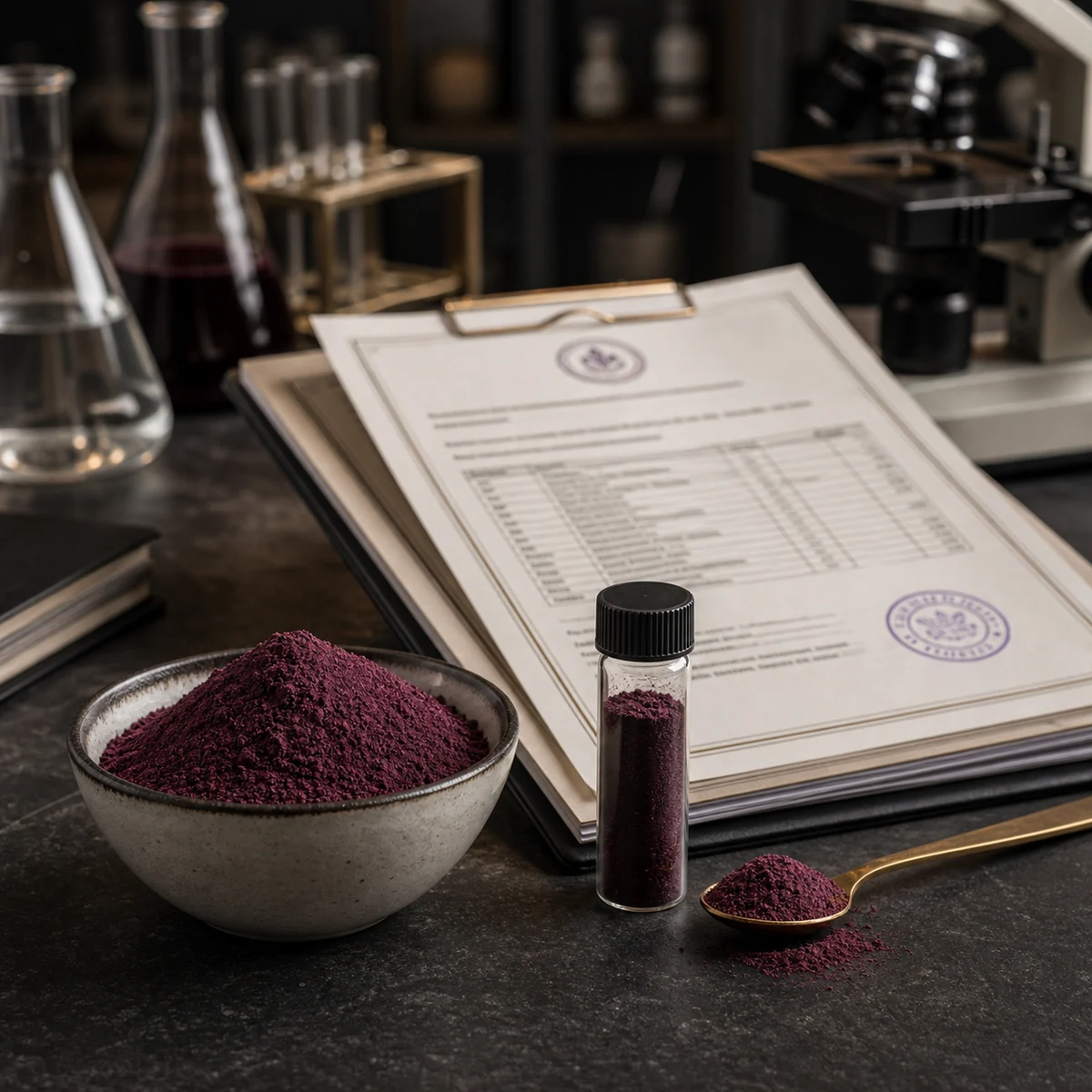
A Certificate of Analysis, or COA, should tell you what was tested, which batch was tested and whether the result fits your specification. For açaí powder, the COA is especially important because color, moisture and microbiology affect both the finished product and shelf life.
The first thing to check: batch identity
A useful COA names the product, batch or lot number, test date and issuing laboratory or quality department. If the document cannot be matched to the batch being shipped, it should not be treated as proof for that shipment.
Typical COA fields
| Field | What to look for |
|---|---|
| Moisture | Lower moisture supports shelf stability and less clumping. |
| Microbiology | Results for pathogens and indicator organisms. |
| Heavy metals | Market-specific limits and buyer specifications. |
| Nutrition markers | Values used for labels and technical sheets. |
| Appearance | Color, odor and powder condition. |
COA vs technical sheet
A technical sheet describes the product specification. A COA reports the tested result for a batch. Buyers need both: the spec tells you what the product should be, and the COA tells you what this shipment is.
Use the COA in supplier approval
Keep the COA with purchase orders, receiving records and internal recipe documentation. If a recipe changes color or flavor, the COA and batch record help you determine whether the issue came from ingredient variation, storage or production handling.
Organic freeze-dried açaí powder, exported worldwide.
Request technical documents