
Conteúdo B2B para equipes de compras, produto e food service. Confirme especificações, dosagem e conformidade nos documentos do lote e nas exigências do seu mercado.
Freeze-Dried Fruit Powder Applications for Food Brands
Fruit powder can add color, flavor and fruit solids across multiple product lines, but each application needs its own hydration and stability test.
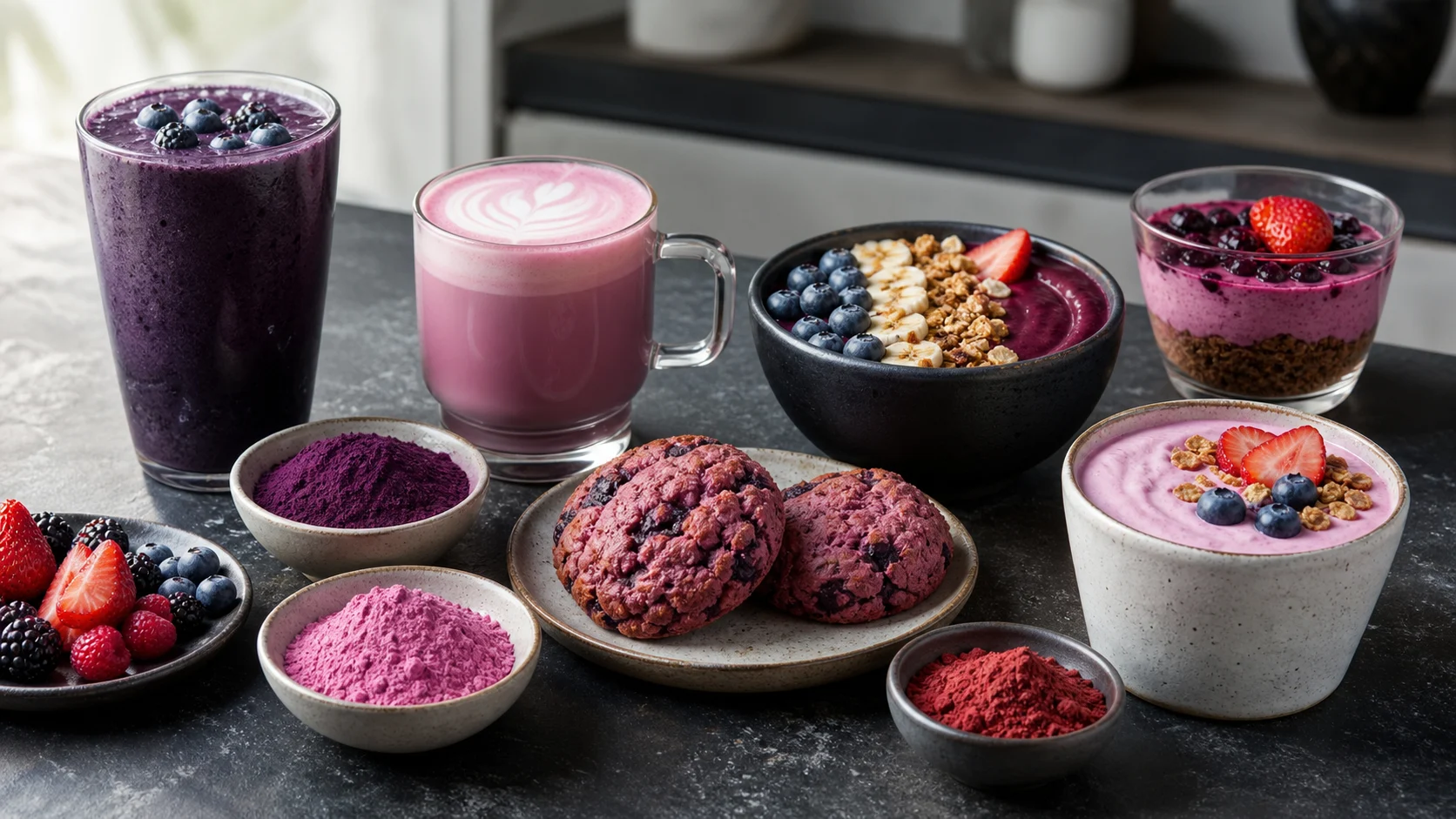
Freeze-dried fruit powders let product developers work with concentrated fruit solids without adding frozen storage or the full water content of a purée. They can support color, flavor, acidity and ingredient storytelling, but they are not interchangeable. Açaí, acerola, camu camu, pitaya and maqui behave differently in water, fat, heat and low-pH systems.
Application map
| Segment | Product examples | First test |
|---|---|---|
| Drinks | Smoothies, lattes, drink mixes | Dispersion, sediment and holding |
| Bakery and pastry | Doughs, creams, fillings, glazes | Color after heat and pH |
| Dairy and alternatives | Yogurt, ice cream, plant bases | Acidity, texture and color migration |
| Snacks | Bars, clusters, coatings, gummies | Moisture pickup and flavor balance |
| Supplements | Powder blends and sachets | Serving size, flow and label inputs |
| Savory and culinary | Sauces, vinaigrettes and plating | Salt, heat and emulsion stability |
Choose the fruit for the job
- Açaí and maqui support deep purple concepts and berry-led formulas.
- Pitaya creates a vivid pink appearance with a milder flavor profile.
- Acerola and camu camu bring brighter acidity and require careful dosage.
- Banana and coconut ingredients can add body and soften sharper fruit profiles.
Dosage is an application decision
Do not copy one dosage across a drink, dough and supplement blend. Start with a small bench range, measure grams against finished batch weight and record color, flavor, viscosity and cost. The correct dose is the lowest level that delivers the intended performance after processing and holding.
Test the full product matrix
Water temperature, fat, protein, sugar, acid and stabilizers can change dispersion and color. A powder that looks strong in water may behave differently in oat base, yogurt or white chocolate. Run the ingredient in the real formula and package, then observe it at production, after holding and at the end of intended shelf life.
Move from bench to production
Before scale-up, lock the powder specification, order of addition, mixing energy, hydration time and acceptable sediment or color range. Give quality and purchasing the same reference sample and COA criteria. This prevents a successful kitchen test from becoming an inconsistent factory process.
Organic freeze-dried açaí powder, exported worldwide.
Explore fruit powder ingredients