
Conteúdo B2B para equipes de compras, produto e food service. Confirme especificações, dosagem e conformidade nos documentos do lote e nas exigências do seu mercado.
Organic Açaí Powder vs Conventional: B2B Buyer Guide
Organic açaí can support a premium product, but B2B buyers need proof. The label only matters if certification, traceability and documentation are aligned.
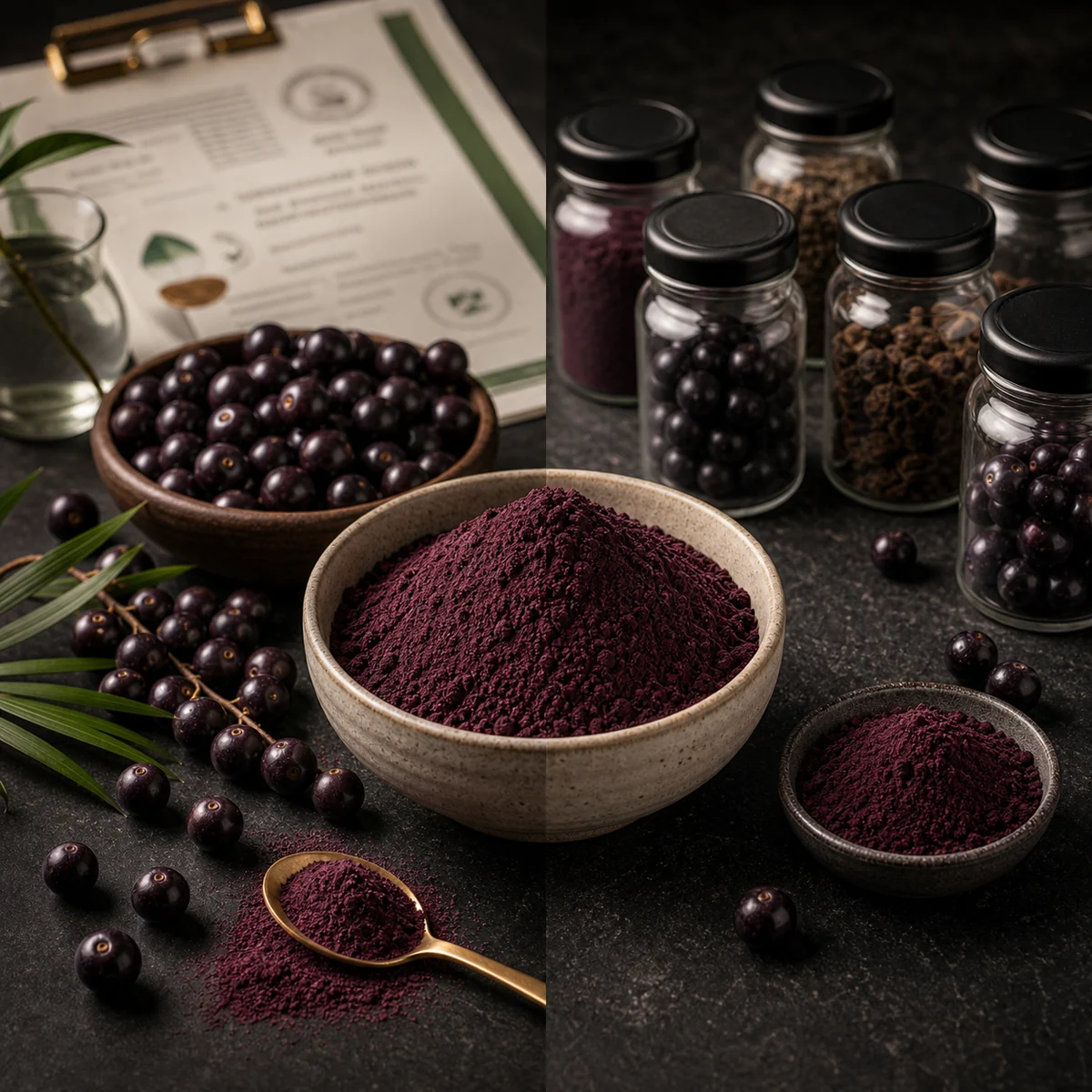
Organic açaí powder and conventional açaí powder can look similar in a spoon, but they behave differently in procurement, labeling and market positioning. The organic option can justify a premium, especially for natural retailers and clean-label brands, but it requires stronger documentation discipline.
What organic changes for a buyer
- Certification must cover the product and supply chain, not only the farm claim.
- Organic import rules can require additional documentation depending on destination market.
- Label language must match the destination country's organic rules.
- Pricing is usually higher, so the finished product needs a channel that values the claim.
When conventional can still be right
Conventional powder can be a strong choice for food service, menu innovation and cost-sensitive formulas where the buyer needs color, flavor and shelf stability more than an organic retail claim. The key is still to demand COA, purity information and consistent processing.
Documents to request
| Document | Why it matters |
|---|---|
| COA | Batch-level quality and microbiology review. |
| Organic certificate | Proof that the claim is supported by certification. |
| Traceability record | Confidence in origin and processing chain. |
| Technical data sheet | Recipe, label and procurement reference. |
Bottom line
Organic is not automatically better for every operation. It is better when your customer values the claim, the documentation is complete, and the added cost is recovered in price or brand positioning.
Organic freeze-dried açaí powder, exported worldwide.
Compare organic supply options